



Why the Jack Rubber Pad Is Essential for Vehicle Safety
A Jack Rubber Pad is a small but critical accessory used during vehicle lifting operations. Whether for routine maintenance, tire replacement, or emergency roadside repairs, vehicle jacks rely on stable contact points to safely raise a car. Without proper surface protection, metal-on-metal contact can lead to slippage, vehicle damage, or even safety hazards.
The Jack Rubber Pad is designed to create a secure interface between the jack and the vehicle’s lifting point. Produced through controlled manufacturing processes, these pads are commonly supplied in standardized or custom forms to meet different lifting requirements. For both professional workshops and individual users, understanding the function and value of a Jack Rubber Pad is essential for improving lifting safety.
.jpg)
What Is a Jack Rubber Pad?
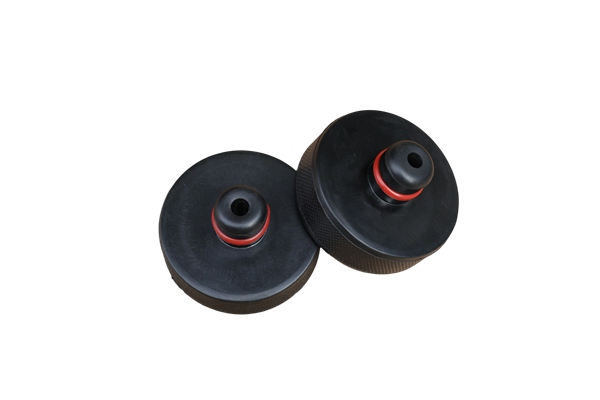
A Jack Rubber Pad is a rubber-based support component placed between a vehicle jack and the vehicle chassis or pinch weld. Its primary purpose is to distribute pressure evenly while preventing slipping or surface damage.
Most Jack Rubber Pads are made from high-density rubber compounds that resist compression, deformation, and wear. The rubber surface increases friction, while the internal structure absorbs shock during lifting. This combination protects sensitive vehicle contact points and improves overall lifting stability.
Pads may vary in shape, thickness, and groove design depending on application requirements, but their core function remains the same: to provide a safer lifting interface.
How Does a Jack Rubber Pad Work?
The working principle of a Jack Rubber Pad is based on load distribution and friction control:
Pressure Distribution
When a jack lifts a vehicle, the weight is concentrated on a small contact area. A Jack Rubber Pad spreads this force across a wider surface, reducing stress on both the jack head and the vehicle’s lifting point.
Anti-Slip Performance
Rubber naturally offers higher friction than metal. The pad minimizes the risk of lateral movement during lifting, especially on uneven surfaces or when lifting heavier vehicles.
Impact Absorption
As lifting begins, minor shocks or vibrations may occur. The rubber material absorbs these forces, reducing sudden load transfer that could cause instability.
Why a Jack Rubber Pad Matters for Vehicle Safety
Protecting the Vehicle Structure
Many modern vehicles have delicate pinch welds or reinforced lift points. Direct metal contact can cause bending, scratching, or long-term structural damage. A Jack Rubber Pad acts as a protective buffer.
Enhancing Lifting Stability
A stable lifting interface reduces the risk of jack slippage. This is especially important during tire changes or underbody inspections where safety margins are limited.
Reducing Accident Risks
Jack-related accidents often result from improper contact or unstable surfaces. Using a Jack Rubber Pad significantly lowers these risks by improving grip and load control.
Common Applications of Jack Rubber Pads
Jack Rubber Pads are widely used in:
·Automotive repair shops
·Vehicle inspection centers
·Home garages
·Roadside emergency kits
·Fleet maintenance operations
Thanks to standardized production methods, manufacturers can supply Jack Rubber Pads in bulk quantities for professional use or customized designs for specific jack models.
Material and Design Considerations
Rubber Compound Quality
High-quality rubber resists cracking, compression set, and temperature variation. This ensures consistent performance under repeated lifting cycles.
Groove and Slot Design
Many pads include grooves to fit vehicle pinch welds or jack saddles securely. Proper alignment improves stability and prevents misplacement.
Thickness and Load Rating
Pad thickness influences load absorption. Heavier vehicles typically require thicker pads with reinforced internal structures.
The Role of Manufacturing and Production Standards
The safety performance of a Jack Rubber Pad depends heavily on manufacturing quality. A professional manufacturer with structured production systems ensures consistent material formulation, accurate molding, and reliable load performance.
Advanced production processes allow for batch manufacturing with uniform quality, supporting bulk supply needs for distributors and service providers. This consistency is critical for safety-focused automotive accessories.
Maintenance and Usage Tips
·Inspect pads regularly for cracks or deformation
·Clean debris from grooves before use
·Store pads away from extreme heat or oil exposure
·Replace pads showing excessive wear
Proper maintenance extends the lifespan of the Jack Rubber Pad and ensures continued safety performance.
Conclusion: Why the Jack Rubber Pad Should Never Be Overlooked
The Jack Rubber Pad plays a vital role in safe and effective vehicle lifting. By protecting vehicle contact points, enhancing stability, and reducing slippage risks, it serves as a simple yet essential safety component.
For workshops, distributors, or users requiring consistent quality and reliable performance, sourcing from a manufacturer with stable production and bulk supply capability ensures dependable results. As vehicle designs evolve and safety standards increase, the Jack Rubber Pad will remain an indispensable accessory in automotive lifting systems.
References
GB/T 7714:Gent A N. Engineering with rubber: how to design rubber components[M]. Carl Hanser Verlag GmbH Co KG, 2012.
MLA:Gent, Alan N. Engineering with rubber: how to design rubber components. Carl Hanser Verlag GmbH Co KG, 2012.
APA:Gent, A. N. (2012). Engineering with rubber: how to design rubber components. Carl Hanser Verlag GmbH Co KG.