



Jack Rubber Pad Maintenance and Replacement Tips
The Jack Rubber Pad plays a critical role in safe and stable vehicle lifting. Positioned between the jack saddle and the vehicle frame, it protects metal surfaces, improves grip, and distributes load evenly. Without proper care, even a high-quality pad can degrade quickly and compromise safety.
For workshops, distributors, and industrial users, maintaining Jack Rubber Pads is just as important as choosing them from a reliable Manufacturer with controlled Production and Factory-level supply. This guide explains how to maintain, inspect, and replace a Jack Rubber Pad to ensure long-term performance and lifting security.
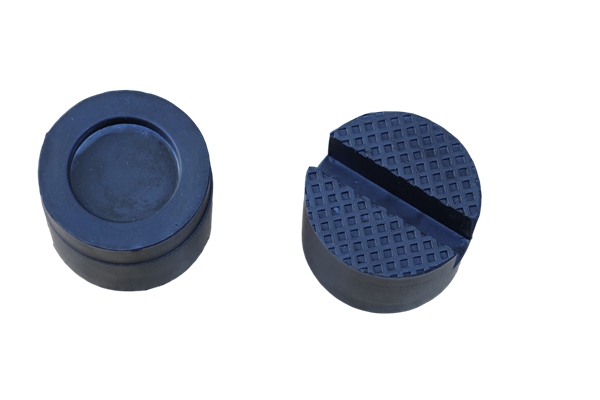
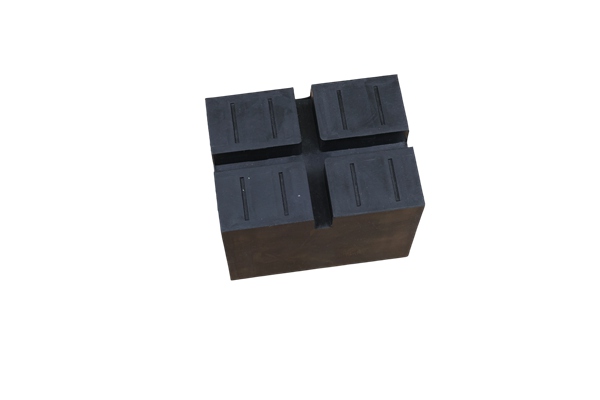
Introduction to Jack Rubber Pad Care
Every time a vehicle is lifted, the rubber pad experiences compression, friction, and shear forces. Over time, repeated stress leads to surface wear, hardening, cracking, or loss of elasticity.
Proper maintenance helps:
·Extend service life
·Improve load stability
·Prevent slippage
·Protect vehicle lifting points
·Reduce replacement costs
A well-maintained Jack Rubber Pad keeps both the equipment and vehicle safe during lifting operations.
What Is a Jack Rubber Pad and Why It Matters
A Jack Rubber Pad is a molded elastomer component mounted on a jack saddle. Its primary purpose is to provide a non-slip, shock-absorbing interface between the jack and the vehicle.
Key functions include:
·Cushioning impact loads
·Increasing friction to prevent movement
·Protecting pinch welds and frames
·Spreading pressure evenly
In Manufacturer-controlled Production, pad materials and geometry are optimized to handle high compressive loads while maintaining elastic recovery.
Common Causes of Jack Rubber Pad Wear
Understanding why Jack Rubber Pads fail helps prevent early replacement.
Common causes include:
·Overloading beyond design capacity
·Chemical exposure to oil, fuel, or solvents
·UV aging from prolonged sunlight
·Surface abrasion from rough metal contact
·Thermal cycling in changing environments
Even with Factory-quality Production, improper usage accelerates deterioration. Preventive care minimizes these risks.
Daily Inspection and Cleaning Methods
Routine inspection is the first step in Jack Rubber Pad maintenance.
Before use, check for:
·Cracks or splits
·Permanent deformation
·Hardening of rubber
·Loss of surface texture
·Embedded metal debris
Cleaning should be simple and gentle:
·Wipe with a damp cloth
·Use mild soap for grease
·Avoid harsh solvents
·Dry fully before storage
Keeping the pad clean preserves friction performance and prevents chemical degradation.
Proper Storage to Extend Pad Life
Storage conditions strongly influence rubber longevity.
Best practices include:
·Store in a cool, dry location
·Avoid direct sunlight
·Keep away from ozone sources
·Prevent heavy stacking loads
·Maintain natural shape without bending
A Jack Rubber Pad produced under Factory standards still needs proper handling after Production to retain its mechanical properties.
When Should You Replace a Jack Rubber Pad?
No pad lasts forever. Replacement ensures safety and stability.
Replace a Jack Rubber Pad if you notice:
·Visible cracking or tearing
·Severe flattening
·Reduced grip
·Hard, brittle surface
·Uneven deformation
Ignoring worn pads increases the risk of slipping and vehicle damage. In professional lifting environments, scheduled replacement is recommended rather than waiting for failure.
How to Choose the Right Replacement Pad
When selecting a new Jack Rubber Pad, match performance with application needs.
Consider:
·Load capacity
·Thickness and shape
·Surface pattern design
·Rubber hardness
·Compatibility with jack saddle
A Manufacturer with advanced Production systems and Factory-scale output can offer consistent dimensions, stable material formulation, and reliable batch quality for replacement programs.
Role of Manufacturer and Factory Production Quality
The durability of a Jack Rubber Pad begins long before installation.
In professional Factory environments, Manufacturers control:
·Rubber compound formulation
·Compression molding accuracy
·Curing temperature and time
·Dimensional tolerance
·Load testing and inspection
High-quality Production ensures every Jack Rubber Pad performs consistently across batches, reducing failure risk during lifting operations.
Choosing Factory-produced pads also supports bulk supply, technical consistency, and predictable performance in workshops and distribution networks.
Best Practices for Long-Term Performance
To maximize Jack Rubber Pad lifespan:
·Avoid exceeding load ratings
·Keep pads clean and dry
·Store properly between uses
·Inspect regularly
·Replace before total failure
Combining proper maintenance with Factory-grade Production quality ensures stable, safe lifting over thousands of cycles.
Conclusion: Maintain Your Jack Rubber Pad for Safe Lifting
The Jack Rubber Pad is a small component with a major impact on lifting safety and vehicle protection. Through routine inspection, correct storage, and timely replacement, users can significantly improve performance and reliability.
When supported by a professional Manufacturer with controlled Production and Factory-scale supply, the Jack Rubber Pad delivers consistent grip, shock absorption, and durability for workshops and industrial users alike.
Proper maintenance is not just care—it is a commitment to safer, smarter, and more efficient lifting operations using a dependable Jack Rubber Pad.
References
GB/T 7714:The science and technology of rubber[M]. Academic press, 2013.
MLA:Mark, James E., Burak Erman, and Mike Roland, eds. The science and technology of rubber. Academic press, 2013.
APA:Mark, J. E., Erman, B., & Roland, M. (Eds.). (2013). The science and technology of rubber. Academic press.