



How Surface Texture Affects Grip Performance
The Auto Jack Anti-slip Rubber Pad is a vital component in safe and stable vehicle lifting. Positioned between the jack saddle and the vehicle’s lifting point, it protects the frame, distributes pressure, and most importantly, improves grip. While users often focus on size or hardness, surface texture plays a decisive role in how well the pad resists slipping under load.
For workshops, distributors, and bulk buyers, selecting an Auto Jack Anti-slip Rubber Pad from a professional Manufacturer with standardized Production and Factory-scale supply ensures consistent texture quality and reliable performance across large-volume orders.
This article explains how surface texture affects grip performance and why it is essential for lifting safety, durability, and efficiency.
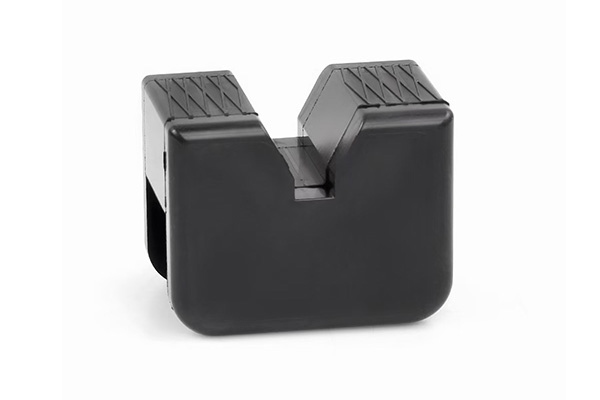
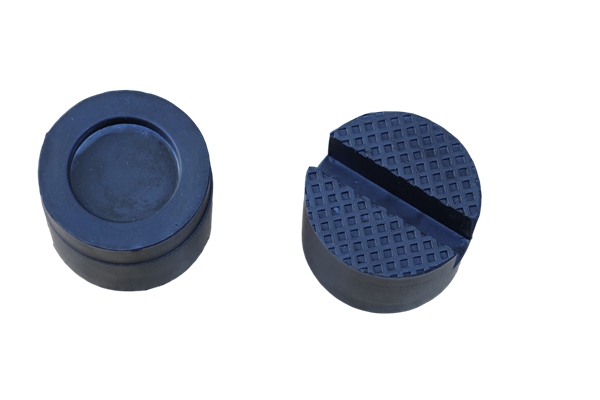
What Is an Auto Jack Anti-slip Rubber Pad?
An Auto Jack Anti-slip Rubber Pad is a molded rubber accessory installed on top of a vehicle jack. Its main functions include:
·Preventing metal-to-metal contact
·Increasing friction between jack and vehicle
·Protecting pinch welds and frames
·Stabilizing the load during lifting
Unlike smooth metal saddles, rubber pads adapt slightly to surface irregularities, improving contact and reducing the risk of shifting or sliding when a vehicle is raised.
Why Grip Performance Matters in Vehicle Lifting
During lifting, the entire weight of a vehicle is transferred through a small contact area. If grip is insufficient, even a slight movement can result in:
·Load misalignment
·Pad displacement
·Vehicle instability
·Potential safety hazards
Grip performance ensures that the Auto Jack Anti-slip Rubber Pad stays in position while the jack applies upward force. Good grip minimizes lateral movement and improves control throughout the lifting process.
That is why texture design is not just cosmetic—it directly impacts safety margins in real-world applications.
Understanding Surface Texture in Rubber Pads
Surface texture refers to the micro- and macro-patterns molded into the top and bottom faces of a rubber pad. These patterns may include:
·Grooves
·Ridges
·Crosshatch designs
·Slots
·Raised dots
Texture influences how the rubber interacts with metal surfaces. A smooth surface offers limited friction, while a textured surface increases mechanical interlocking between materials.
During Factory Production, Manufacturers use precision molds to control texture depth, spacing, and geometry, ensuring each Auto Jack Anti-slip Rubber Pad maintains consistent grip behavior across batches.
How Texture Enhances Friction and Stability
Grip performance comes from friction. Surface texture increases friction in two main ways:
1.Mechanical interlock – Texture features fit into surface irregularities of the metal jack or vehicle frame.
2.Contact pressure modulation – Raised patterns concentrate pressure locally, improving surface contact under load.
When a vehicle presses onto an Auto Jack Anti-slip Rubber Pad, the textured surface slightly deforms, allowing the rubber to “bite” into the metal. This reduces sliding even when the load shifts slightly during lifting.
Without texture, smooth rubber can behave like a flat plate, offering limited resistance to lateral movement.
Texture Patterns and Load Distribution
Texture does more than increase friction; it also affects how load is distributed.
·Wide grooves help center the lifting force and prevent sideways movement.
·Cross patterns distribute stress across multiple contact points.
·Slot designs align with pinch welds and edges for stability.
By managing how pressure flows through the pad, texture prevents stress concentration that could damage vehicle frames or cause pad deformation.
Professional Manufacturer design teams optimize texture geometry during Production to balance grip, load support, and durability for Factory-scale applications.
Material, Texture, and Production Control
Texture performance depends on both geometry and material.
High-quality Auto Jack Anti-slip Rubber Pads use engineered rubber compounds that provide:
·Elastic compliance
·Abrasion resistance
·Compression stability
·Temperature tolerance
During Factory Production, texture integrity is maintained through:
·Precision mold tooling
·Controlled curing temperature
·Consistent compound mixing
·Dimensional inspection
If Production quality is inconsistent, texture edges may wear prematurely or deform under load, reducing grip over time. Reliable Manufacturers therefore combine material engineering with texture control to ensure long-term performance in repeated lifting cycles.
Applications Requiring Anti-slip Performance
Auto Jack Anti-slip Rubber Pads are widely used in:
·Automotive repair workshops
·Tire service centers
·Vehicle maintenance garages
·Industrial vehicle servicing
·Home mechanical environments
In each case, strong grip performance ensures the vehicle remains stable while elevated. Texture becomes especially important on narrow jack points, uneven surfaces, and modern vehicle frames with thin metal seams.
With Factory-scale Production, suppliers can offer multiple texture styles to match different lifting requirements and customer preferences.
Choosing the Right Surface Texture
When selecting an Auto Jack Anti-slip Rubber Pad, consider:
·Vehicle lifting point geometry
·Jack saddle shape
·Load capacity requirements
·Frequency of use
·Environmental conditions
If the lifting point has edges or seams, deeper grooves improve alignment and grip. If the contact area is flat, cross-textured surfaces enhance friction without damaging frames.
Partnering with a Manufacturer that supports scalable Production and Factory-level inspection ensures texture consistency, durability, and safety across bulk orders.
Conclusion: Auto Jack Anti-slip Rubber Pad Grip Starts with Texture
The Auto Jack Anti-slip Rubber Pad plays a critical role in safe vehicle lifting, and surface texture is at the heart of its grip performance. By increasing friction, stabilizing load distribution, and protecting vehicle frames, textured rubber pads reduce slipping risks and improve lifting control.
Backed by professional Manufacturer engineering, standardized Production, and Factory-scale supply, modern Auto Jack Anti-slip Rubber Pads combine material science and surface texture design to deliver stable, durable, and reliable anti-slip performance.
Choosing the right texture is not just about appearance—it is about safety, efficiency, and confidence every time an Auto Jack Anti-slip Rubber Pad supports a vehicle.
References
GB/T 7714:Persson B N J. Theory of rubber friction and contact mechanics[J]. The Journal of Chemical Physics, 2001, 115(8): 3840-3861.
MLA:Persson, Bo NJ. "Theory of rubber friction and contact mechanics." The Journal of Chemical Physics 115.8 (2001): 3840-3861.
APA:Persson, B. N. (2001). Theory of rubber friction and contact mechanics. The Journal of Chemical Physics, 115(8), 3840-3861.