



Protecting the Vehicle Undercarriage During Lifting
Vehicle lifting is a routine operation in automotive repair, tire replacement, and maintenance work. However, improper contact between a jack and the vehicle can easily cause damage to the undercarriage, including bent pinch welds, scratched frames, or compromised structural points.
A Jack Rubber Pad is designed to create a protective interface between the lifting equipment and the vehicle body. By absorbing pressure and improving contact stability, jack rubber pads significantly reduce the risk of undercarriage damage during lifting operations.
Understanding Vehicle Undercarriage Vulnerability
The undercarriage of a vehicle includes critical structural and functional components such as frame rails, suspension mounting points, exhaust systems, and protective panels. These areas are not always designed to withstand direct metal-to-metal contact with lifting equipment.
Even small alignment errors can concentrate force on a narrow area, leading to deformation or surface damage. This is why protective accessories like jack rubber pads are increasingly used in professional and personal automotive maintenance.
What Is a Jack Rubber Pad?
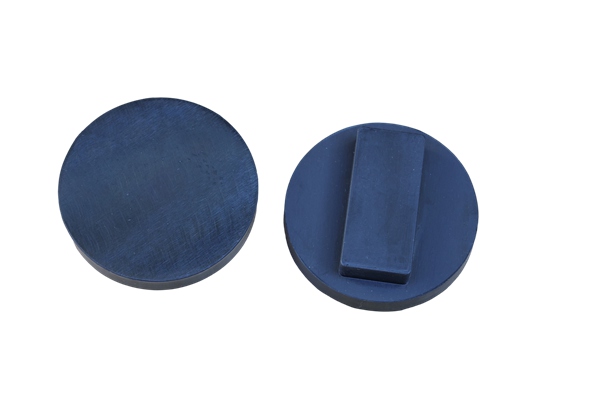
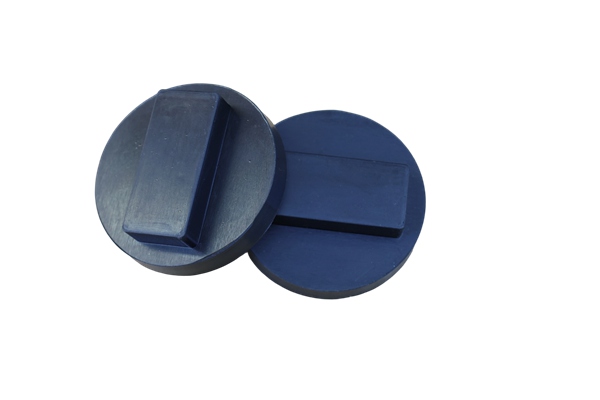
A Jack Rubber Pad is typically made from high-strength rubber or elastomer materials and placed on top of a jack saddle. Its purpose is to provide cushioning, grip, and load distribution during vehicle lifting.
Jack rubber pads are commonly used with floor jacks, scissor jacks, and workshop lifting equipment. Their design often includes grooves or textured surfaces to align with vehicle lift points.
Load Distribution and Pressure Reduction
One of the primary ways a jack rubber pad reduces damage is by distributing load more evenly. Without a pad, lifting force is concentrated on a small metal contact area.
The rubber pad spreads the load across a wider surface, lowering pressure at any single point. This helps protect pinch welds and reinforced lift areas from bending or cracking under load.
Preventing Slippage and Misalignment
Slippage during lifting is a major safety concern. Metal jack saddles can slide against painted or coated undercarriage surfaces, especially when the lifting angle is not perfectly vertical.
Jack rubber pads provide enhanced friction, helping keep the jack securely positioned. This stability reduces the risk of sudden shifts that can damage the undercarriage or create unsafe working conditions.
Vibration Absorption and Impact Protection
Lifting and lowering a vehicle can generate vibrations or minor impacts, particularly when working on uneven surfaces. A Jack Rubber Pad absorbs these vibrations, acting as a buffer between the jack and the vehicle.
This cushioning effect reduces micro-damage over repeated lifting cycles, which is especially important in professional workshops where vehicles are lifted frequently.
Compatibility With Different Vehicle Designs
Modern vehicles feature a wide range of undercarriage designs, from reinforced steel frames to lightweight aluminum components. Jack rubber pads are adaptable to these variations.
Grooved or slotted pad designs help align with manufacturer-specified lift points, reducing the chance of incorrect placement. This versatility makes jack rubber pads suitable for multiple vehicle types without modification.
Reducing Long-Term Wear on Vehicle Structures
Repeated lifting without proper protection can gradually weaken lift points. Over time, this may lead to corrosion exposure, cracked coatings, or structural fatigue.
By consistently using a jack rubber pad, vehicle owners and technicians can reduce cumulative wear. This contributes to maintaining the vehicle’s structural integrity and resale value.
Safety Benefits for Operators
Protecting the vehicle is only part of the benefit. Jack rubber pads also enhance operator safety by improving lifting stability and reducing unexpected movement.
A secure lift minimizes the risk of jack failure or vehicle shift, creating a safer working environment for maintenance tasks under the vehicle.
Material Quality and Manufacturing Considerations
The performance of a Jack Rubber Pad depends heavily on material formulation and production quality. High-density rubber compounds are designed to balance flexibility with load-bearing strength.
From a manufacturer perspective, controlled production processes ensure consistent hardness, durability, and dimensional accuracy. This is especially important for bulk supply scenarios where uniform performance is expected across large quantities.
When to Replace a Jack Rubber Pad
Like all protective components, jack rubber pads have a service life. Signs that replacement is needed include cracking, excessive compression, surface hardening, or loss of grip.
Regular inspection ensures continued protection and prevents unexpected failure during lifting operations.
Conclusion: A Simple Tool That Prevents Costly Damage
A Jack Rubber Pad is a small but essential accessory that plays a major role in protecting vehicle undercarriages. By distributing load, preventing slippage, absorbing vibration, and improving lifting stability, it reduces the risk of damage during routine maintenance.
For workshops and individual users alike, incorporating jack rubber pads into lifting procedures is a practical and cost-effective way to improve safety, extend vehicle lifespan, and ensure reliable lifting performance over time.
References
GB/T 7714:Gent A N. Engineering with rubber: how to design rubber components[M]. Carl Hanser Verlag GmbH Co KG, 2012.
MLA:Gent, Alan N. Engineering with rubber: how to design rubber components. Carl Hanser Verlag GmbH Co KG, 2012.
APA:Gent, A. N. (2012). Engineering with rubber: how to design rubber components. Carl Hanser Verlag GmbH Co KG.