



Jack Rubber Pad products play a crucial role in vehicle lifting and maintenance. Whether used with hydraulic jacks, floor jacks, or lifting equipment, a high-quality Jack Rubber Pad protects vehicle frames and ensures safe lifting operations.
Behind this seemingly simple component lies a carefully controlled manufacturing and production process. From selecting the right rubber compounds to molding and finishing, professional Jack Rubber Pad manufacturers follow several steps to ensure durability, load resistance, and long service life.
This article explores how Jack Rubber Pads are manufactured, providing insight into the production workflow used by experienced manufacturers supplying bulk industrial components.
Raw Material Selection for Jack Rubber Pad Production
The manufacturing process begins with selecting the appropriate rubber material. Since Jack Rubber Pads must withstand heavy loads and repeated compression, manufacturers typically use durable rubber compounds such as:
·Natural rubber
·Nitrile rubber (NBR)
·Styrene-butadiene rubber (SBR)
·High-density industrial rubber blends
Each compound provides different benefits. For example, natural rubber offers strong elasticity, while NBR provides excellent oil resistance.
Professional Jack Rubber Pad manufacturers often customize the rubber formula to meet different lifting equipment requirements. The goal is to ensure the pad maintains structural stability while protecting vehicle surfaces.
Before production begins, the rubber materials are tested for:
·Hardness
·Tensile strength
·Compression resistance
·Temperature stability
These tests ensure the raw material is suitable for large-scale Jack Rubber Pad production.
Rubber Mixing and Compounding
After selecting the rubber materials, the next stage involves mixing and compounding. This process blends the base rubber with additional ingredients that improve performance.
Common additives include:
·Carbon black for reinforcement
·Vulcanizing agents for durability
·Anti-aging agents
·Processing oils
The mixing process typically takes place in industrial rubber mixers or internal mixers. The materials are blended under controlled temperature and pressure to achieve a uniform rubber compound.
This step is essential for maintaining consistent quality in Jack Rubber Pad manufacturing, especially for manufacturers supplying bulk orders to global markets.
Molding the Jack Rubber Pad Shape
Once the rubber compound is prepared, it moves to the molding stage, where the Jack Rubber Pad takes its final shape.
Manufacturers commonly use compression molding or injection molding techniques. During this step:
1.The rubber compound is placed into a metal mold.
2.Heat and pressure are applied.
3.The rubber flows into the mold cavity.
4.The material cures and solidifies.
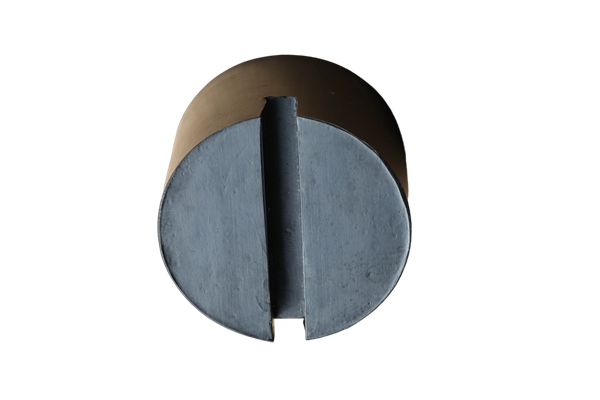
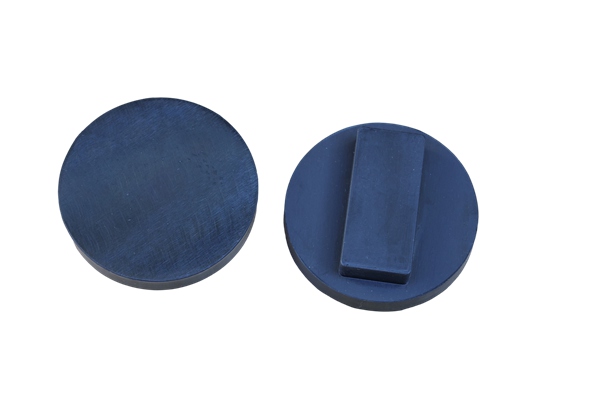
The molds are designed according to the pad’s specifications, including grooves, slots, or anti-slip patterns. These structural features help the pad fit securely on lifting equipment and protect vehicle chassis points.
Precise mold design is important for efficient Jack Rubber Pad production, especially when producing thousands of units for bulk supply.
Vulcanization and Strength Development
After molding, the rubber undergoes vulcanization, a heat-based chemical process that strengthens the rubber.
During vulcanization:
·Rubber molecules form cross-linked structures
·The material becomes more durable and elastic
·Resistance to wear, pressure, and deformation increases
Without proper vulcanization, Jack Rubber Pads would quickly degrade under heavy loads. For this reason, manufacturers closely monitor temperature, pressure, and curing time during the production process.
This step ensures the final product can withstand the demanding conditions of automotive lifting and workshop environments.
Trimming and Surface Finishing
Once vulcanization is complete, the molded Jack Rubber Pads are removed from the molds. At this stage, some finishing work is required.
Typical finishing processes include:
·Removing excess rubber edges
·Surface smoothing
·Cleaning and polishing
·Visual inspection
Some manufacturers also add textured surfaces or grooves to improve grip and stability.
These finishing steps help maintain consistent quality in Jack Rubber Pad manufacturing, particularly for products intended for professional automotive workshops and equipment distributors.
Quality Inspection and Performance Testing
Quality control is an essential part of the Jack Rubber Pad production process. Before products are approved for shipment, manufacturers conduct several tests.
These tests may include:
·Load-bearing tests
·Compression deformation tests
·Hardness testing
·Dimensional accuracy checks
Each pad must meet strict quality standards to ensure safety during vehicle lifting operations.
Reliable Jack Rubber Pad manufacturers supplying bulk orders typically implement multiple inspection stages throughout production. This helps guarantee product consistency and performance.
Packaging and Bulk Supply
After passing quality inspection, the Jack Rubber Pads are prepared for shipment.
Manufacturers usually package the pads in:
·Protective plastic bags
·Cartons for bulk transport
·Palletized shipments for international delivery
Bulk packaging allows distributors, equipment suppliers, and industrial buyers to receive large quantities efficiently.
For many global buyers, working directly with a Jack Rubber Pad manufacturer with established production capability ensures stable supply, consistent product quality, and flexible customization options.
Conclusion
Although Jack Rubber Pads may appear simple, their manufacturing process involves careful material selection, precision molding, controlled vulcanization, and strict quality inspection.
Professional Jack Rubber Pad manufacturers rely on advanced rubber processing technology to produce durable lifting pads suitable for demanding automotive environments. Through efficient production systems and quality control procedures, manufacturers are able to supply reliable Jack Rubber Pads in large quantities to meet the needs of global markets.
Understanding how Jack Rubber Pads are manufactured provides valuable insight into the engineering and production expertise behind these essential lifting accessories.
References
GB/T 7714:Callister Jr W D, Rethwisch D G. Materials science and engineering: an introduction[M]. John wiley & sons, 2020.
MLA:Callister Jr, William D., and David G. Rethwisch. Materials science and engineering: an introduction. John wiley & sons, 2020.
APA:Callister Jr, W. D., & Rethwisch, D. G. (2020). Materials science and engineering: an introduction. John wiley & sons.